

Why
The Devil Wears
Prada
is Really a Psychological
Thriller

Why
The Devil Wears Prada
is Really a Psychological Thriller
Why
The Devil Wears Prada
is Really a Psychological Thriller

Why
The Devil Wears Prada
is Really a Psychological Thriller
Why
The Devil Wears Prada
is Really a Psychological Thriller
Why THE DEVIL WEARS PRADA is Really a Psychological Thriller
Plus, who the real villain of the movie is. (Hint: it’s not Miranda, and it’s not Nate either.) 👠✨
A. T. Napoli
4/4/20268 min read
by A. T. Napoli
4.4.2026
Plus, who the real villain of the movie is. (Hint: it’s not Miranda, and it’s not Nate either.)
👠 Nearly twenty years later, and with The Devil Wears Prada 2 less than a month away, it's worth saying this plainly:
The Devil Wears Prada was never just ~a fashion movie.~
It remains a comfort watch, sure, a workplace dramedy and a star vehicle for Meryl Streep as Miranda Priestly, Anne Hathaway as Andy Sachs, Emily Blunt as Emily Charlton, and Stanley Tucci as Nigel.
But I’d argue it’s something darker, sharper, and far more enduring than a glossy lil chick flick. (“That designation," said Streep on Colbert, 2026, "has not worn well.")
It’s a psychological thriller.


The "Job a Million Girls Would Die For...”
Well...—maybe not in the conventional, literal sense. No one is chased through hallways with a knife! No, it’s deeper than that:
Andy Sachs enters a glamorous queendom she doesn’t understand, makes a deal with the devil herself, and slowly becomes someone she barely recognizes in exchange for access, status, and approval. That is thriller logic. That is creeping suspense with a surprise twist at the end. And that is exactly why the film endures.
But if every thriller needs a villain, who is the one here?
The title would have you believe it’s Miranda Priestly, while the internet has spent years trying to pin it on Nate.
Both readings miss the point entirely.
Warning. Spoilers ahead (please see this movie if you haven’t already).


All photos courtesy of The Devil Wears Prada (2006), 20th Century Fox


And everybody loves a villain.
But even if Meryl Streep as Miranda Priestly is one of the greats, the cult of Miranda is only half the story.
She is icy, exacting, terrifying, and immaculate—true. Miranda barely raises her voice and still controls every room she enters. Her employees don’t just work for her; they learn to anticipate her every mood like weather, making for an atmosphere of dread.
That’s what makes Miranda so compelling: she isn’t merely mean. The myth and cult of Miranda Priestly is a glamour in itself—a carefully cultivated persona of taste and terror through which everyone around her orbits. As Nigel makes clear, hers is the only opinion that matters. It's Miranda's world, we're all just living in it.
But The Devil Wears Prada isn’t just about a boss everyone fears.
It’s about entry into a closed system with its own rituals, hierarchies, codes, and punishments. Miranda has created a queendom of standards. “Everybody wants this,” she says. Everybody wants to be them.
Which brings us to the movie’s central question:
Where does Miranda’s world end, and where does Andy begin?
“Everybody Wants This. Everybody Wants to Be Us.”
Part of Miranda’s power lies in how deliberately Meryl Streep constructed her. Speaking to Variety, Streep explained that Miranda’s famously quiet voice was inspired by Clint Eastwood’s refusal to raise his own.
"He never, ever, ever raises his voice, and everyone has to lean in to listen, and he is automatically the most powerful person in the room."
"But," Streep continued, "he is not funny. That I stole from Mike Nichols. The way the cruelest cutting remark, if it is delivered with a tiny self-amused curlicue of irony, is the most effective instruction, the most memorable correction, because everyone laughs, even the target."
The result was unnerving enough that Anne Hathaway recalled that everyone expected Miranda Priestly to sound “strident” and loud; instead, when Meryl Streep began to speak in a near-whisper, “everybody in the room drew a collective gasp.” The only part Streep claimed entirely for herself? “The walk, I’m afraid, is mine.”


Andy’s Deal with the Devil
Andy starts the movie as an outsider: smart, skeptical, and convinced that because she doesn’t care about fashion, she is somehow morally above the world of Runway.
Which is exactly what makes her vulnerable.
That is what The Devil Wears Prada is really about: seduction. Andy doesn’t recognize Runway as a system capable of reshaping her until she has already begun to accept its rewards. The Chanel boots, the language she adopts, the newfound competence—these are not superficial changes. This makeover isn’t just about looks. These changes are evidence of buy-in, of a slow psychological initiation into values Andy once denied.
Andy doesn’t just start dressing the part. She starts wanting what the world of Runway—and, through it, what Miranda—wants from her. She begins to accept its values, its logic, and its terms.
That is where the film begins to feel less like a workplace dramedy and more like a psychological thriller. The suspense lies not in whether Andy survives the job, but in how much of herself she is willing to surrender to it. And that’s the appeal: we go along for the transformation with her, even as we begin to sense what it’s costing.
As Emily tells her, “You sold your soul the minute you put on your first pair of Jimmy Choos.”
Precisely! 👠


Emily in Paris
Certainly, Paris is where the movie stops pretending this is another Cinderella story.
On one hand, Emily has built her entire life around getting to Paris. She is the believer, the acolyte, the one who understands the cost of proximity to Miranda and pays it willingly. Andy, by contrast, stumbles into this world (mocking it. Cerulean sweater, anybody?).
And yet in the end, it is Andy who takes Paris.
By then, Andy has traded out her body, her wardrobe, her schedule, her relationships, her language, and her ethics. She cheats on Nate. She betrays Emily, knowing Paris is her dream. She absorbs Miranda’s acumen.
Most importantly, she excuses herself all the way down. She tells herself she has no choice. And Miranda reminds her of the truth that gives the story its real sting:
Everybody has a choice.
So it comes as a shock in the end, in that climactic scene in the car. We’ve been rooting for Andy all along; we forget that, by then, she is no longer merely surviving the system or morally above it. She is participating in it.
That is what makes The Devil Wears Prada feel like a psychological thriller. The danger is not the devil in Prada alone. The danger lies in how easily Andy is seduced by her. How quickly she adapts. How complicit she has become.
But to what end? Who is she by the film's conclusion?
"I never understood why everyone was so crazy about Paris, but now... It's so beautiful," Andy says.


So Who’s the Real Villain?
This is where I part ways with the internet’s favorite take.
The real villain is not Nate. Is he selfish? Very. Annoying? Often. The villain? Not quite.
It’s not Miranda either—or at least, not entirely. Miranda is ruthless, yes, but she is also honest about the rules of her world. She doesn’t pretend this is a family. She's not a #girlboss marketing exploitation as empowerment. She doesn’t even ask to be loved. She just asks to be met at her level. "That's all."
Miranda is the film’s most visible antagonist. Nate is its easiest scapegoat. But neither is the deepest villain in the story. And Andy, she isn’t actually the villain either. The answer is more nuanced than that.
The deeper villain is the dream she's sold.
More specifically, it’s the version of the American Dream that tells us self-betrayal is ambition, that becoming unrecognizable is success, and that if the rewards are beautiful enough, the moral cost be damned.
Andy is not secretly evil. She’s seduced. She’s tested. She wants to get ahead. And that is much more interesting than calling her—or anyone, for that matter—the villain. Because the movie’s real question isn’t “Who’s the bad guy?” It’s:
What would you do?
What would you trade for access, in Andy's high-heeled shoes?
How much of yourself would you reshape to belong?
At what point does working hard become becoming someone else?
That’s why I’ll always argue that The Devil Wears Prada plays like a psychological thriller in stilettos—surely, one of our culture’s greats.
Its tension comes from its high-pressure atmosphere of seduction, reinvention, identity erosion, moral compromise, and the eerie, slowburn horror of watching someone get exactly what she thought she wanted—only to realize the price was herself.
"He did behave like a brat, but I also behaved like a brat in my 20s, and I hopefully grew out of it. I think that's what we all do. I wouldn't want to be defined by my worst moment in my 20s, certainly, so I don't hold Nate as a villain actually."
—Anne Hathaway on fans labeling Nate the villain of The Devil Wears Prada. Seen on Bravo's Watch What Happens Live with Andy Cohen, October 24, 2022.


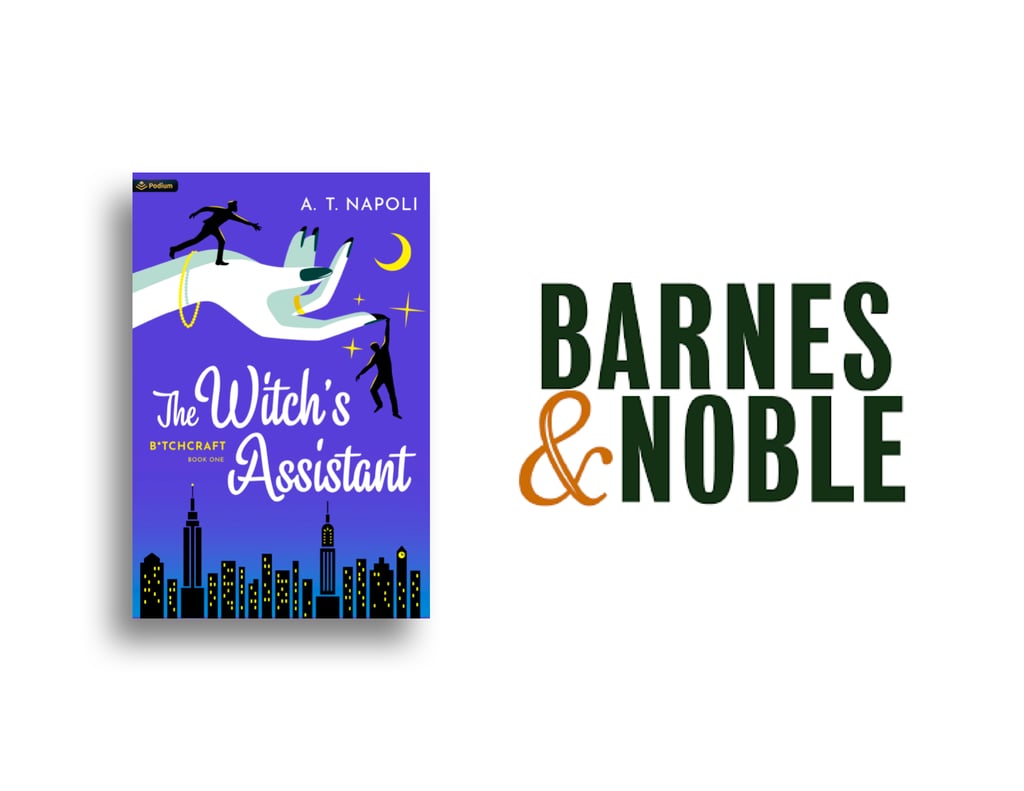
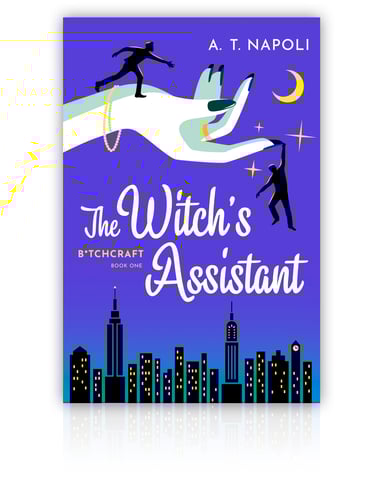
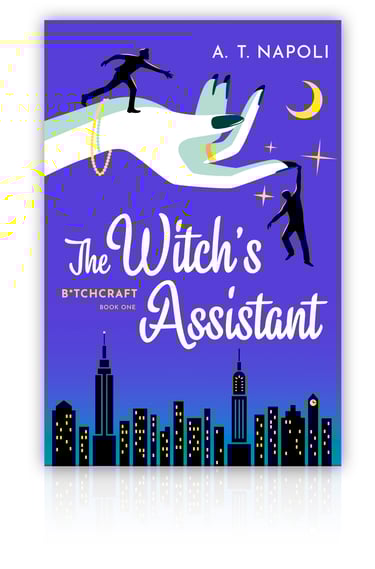
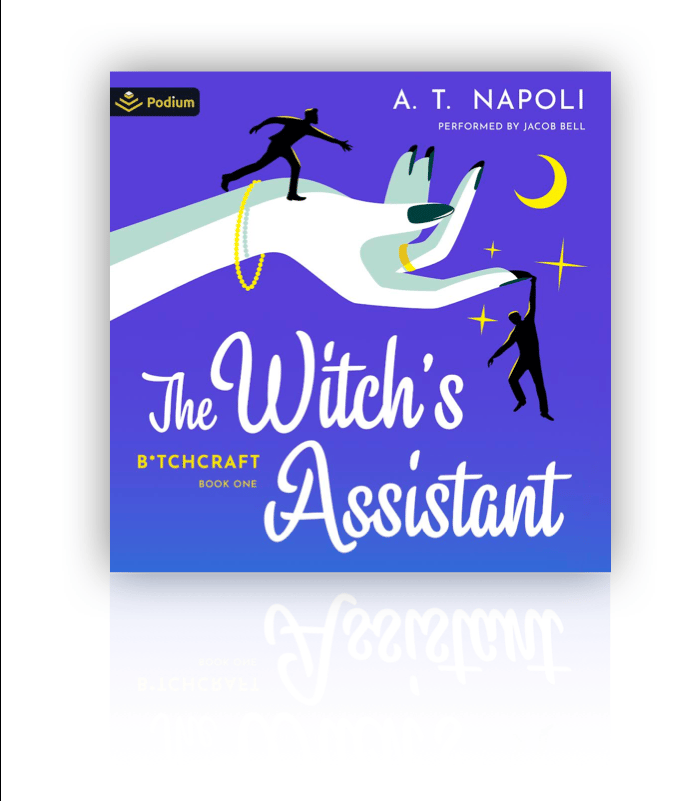
In The Witch’s Assistant, Book One of my B*TCHCRAFT🌙 series, I wrote my own Devil Wears Prada-by-way-of-witchcraft, psychological thriller:
A young intern enters a glamorous, predatory world, and begins to wonder whether it’s all in his head—or whether the people around him are actual witches. By then, of course, the spell is already working, and he is already in too deep.
But this is more than homage and more than pastiche. What begins in the shadow of Prada turns into something stranger, darker, and more surprising in the end.
You'll just have to read to find out how.


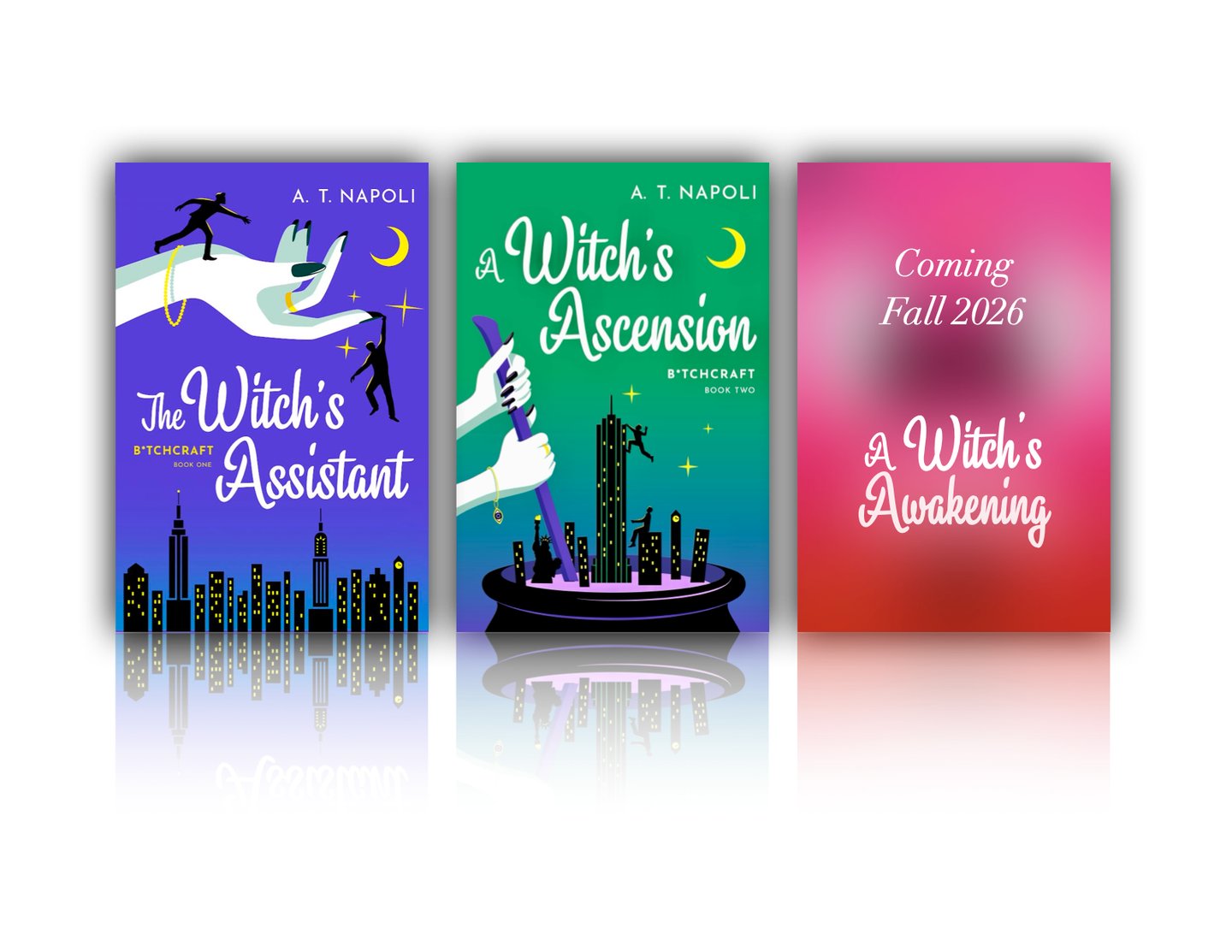

Prada & Pastiche







Available Now On
A quirky, queer DEVIL WEARS PRADA fantasy — KIRKUS REVIEWS
More on the
B*TCHCRAFT
Blog


More on the B*TCHCRAFT Blog
CONTACT
© 2026 A. T. Napoli. All rights reserved. All spells final.
Join the mailing list for the latest updates and exclusive content on THE WITCH'S ASSISTANT and its sequels.
Don't Break the Circle...
There's no in
Btchcraftbooks@gmail.com








The Witch's Assistant
B*TCHCRAFT Book One 🌙
A quirky, queer DEVIL WEARS PRADA fantasy — KIRKUS REVIEWS

